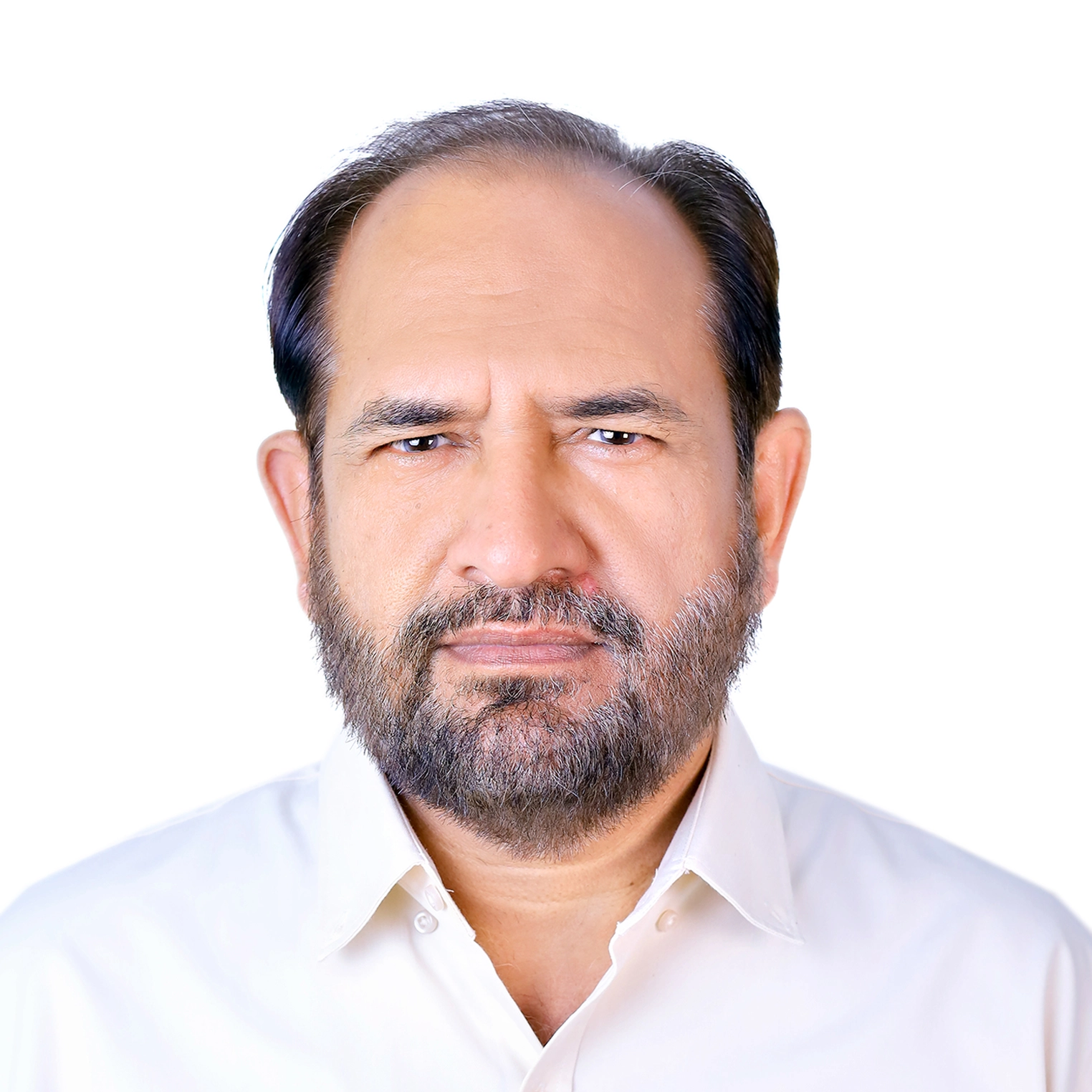
Dr. Asad Shahzad holds a PhD and an MS in Economics from the Institute of Business Management. He earned his MA in English Literature from the University of Karachi. He currently serves as an Associate Professor and HoD of the Center for Policy and Area Studies at IoBM. He has taught at several reputable educational institutions. He has also written newspaper articles and presented papers at national and international conferences. His paper “Incoherences in Konrad Lorenz’s Concept of Aggression” (a comparative analysis of Konrad Lorenz and Imam Ghazali on aggression) was discussed in Jai Galliott’s Commercial Space Exploration: Ethics, Policy, and Governance. His papers have been published in Impact Factor journals indexed in the Web of Science Core Collection, including journals from Taylor and Francis, Sage, and Springer. His latest paper, “A Critical Assessment of Habermas’s Vision of Political Integration of Europe and Prospects of Transnational Social Justice,” was published in the Eastern Journal of European Studies (indexed in Web of Science) in June 2026. He published “Iqbal’s Spiritual Democracy and Habermas’s Deliberative Democracy: A Comparative Analysis” in the Journal of Islamic Thought and Civilization in June 2024. He moderated/chaired a panel discussion on Scientific and Technological Innovation: Developing Collaborative Research Networks in the Muslim Majority Countries at the IQRA’ 2025 Global Conference. In November 2025, he participated as a panelist in the 7th International Iqbal Conference, organized and hosted by Bahria University Karachi Campus. He received the best paper award (across all categories) in General Management (Business Ethics) at the International Research Conference on Contemporary Management Practices 2013, held by Lahore University of Management Sciences (LUMS). He composes poetry in Urdu and has published a collection titled Saboocha. He has also translated English and Persian poetry into Urdu. His research addresses significant contemporary economic, political, and ethical issues at the intersection of conservatism, modernism, and postmodernism. His expertise includes the theory and history of economic thought, morality and business ethics, Western philosophy, Muslim philosophy, and world literature.